Introduction and History of the Faculty
The Faculty of Physics and Energy Engineering encompasses a broad spectrum of scientific disciplines and specialties, ranging from the study of the fundamental laws governing the universe to highly applied fields based on advanced technologies.
Following the Islamic Revolution and the reopening of Iranian universities, the Departments of Physics and Mathematics resumed their activities as part of the Faculty of Basic Sciences at Amirkabir University of Technology. In 1988, the Faculty of Physics and Energy Engineering was established as an independent faculty. In the same year, in collaboration with the Atomic Energy Organization of Iran, it launched a Ph.D. program in Nuclear Engineering, which was the first doctoral program in engineering sciences offered in Iran.
The Faculty consists of three academic departments: Physics, Nuclear Engineering, and Energy Engineering. The Department of Physics includes research areas in Optics and Lasers, Condensed Matter Physics, High-Energy Physics, Cosmology, and Astrophysics. The Department of Nuclear Engineering offers programs in Radiation Applications, Medical Radiation Engineering, Fusion Engineering, Reactor Engineering, and Health Physics. The Department of Energy Engineering focuses on Energy Systems and Renewable Energy.
The Faculty offers undergraduate programs in Physics and Energy Engineering; master's programs in Physics, Nuclear Engineering, and Energy Engineering; and doctoral programs in Physics and Nuclear Engineering. In addition, it offers interdisciplinary programs in Photonics Engineering and Energy Engineering, which are also open to undergraduate students from Electrical and Mechanical Engineering.
The Faculty currently has more than 750 students enrolled across its undergraduate, master's, and doctoral programs. To date, it has graduated 216 Ph.D. students, more than 1,300 master's students, and approximately 900 bachelor's students.
Since its establishment, the Faculty's faculty members and students have published 1,055 papers indexed in the ISI database, presented 417 papers at international conferences and 577 papers at national conferences, and obtained 48 domestic patents and 14 international patents.
The Faculty is currently engaged in several major research and development projects, including the design and construction of a medical cyclotron, the design and construction of a tokamak and ion sources, enhanced oil recovery diagnostics using pulsed plasma technology, laser spectroscopy–based biomedical research, optimization of solar panels, and quantum cryptography.
The Faculty maintains international collaborations through faculty and student exchange programs with Sungkyunkwan University (South Korea), the University of Waterloo (Canada), the University of Freiburg (Germany), the University of Surrey (United Kingdom), and the University of Alberta (Canada). It actively participates in joint international research and academic collaborations.
Future academic and infrastructure development plans include establishing an Innovation Center for Physics and Energy Engineering, upgrading specialized research laboratories with state-of-the-art analytical instruments, and modernizing shared service laboratories with advanced equipment.
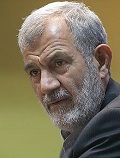
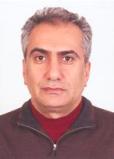
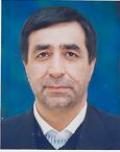
Chairs of the Department since 1988



.jpeg)
.jpg)